
One humid Austin evening last summer, I sat in my home office staring at a support email that looked perfect, until I noticed the sender domain had an extra 's' tucked into the middle. It was a classic phishing attempt, nearly identical to the HubSpot scare I had back in 2022 that originally kicked off my obsession with login hygiene. Back then, I was just another marketing ops manager drowning in SaaS subscriptions, using the same three passwords for everything from our email automation tools to the office snack delivery app.
That 2022 near-miss changed me. I didn't just get a password manager; I became the person who keeps a dedicated test laptop on a corner of my desk just for trying out vault apps. Over the last two years, from late autumn 2024 through this early autumn of 2026, I have systematically paid for and lived in almost every major player: 1Password, LastPass, Bitwarden, Dashlane, Proton Pass, and RoboForm. I have notes, spreadsheets, and a very confused credit card statement to prove it.
As a marketing person, I’m used to companies telling me their product is 'unbreakable' or 'military-grade.' But when you start looking at the actual zero-knowledge architecture that powers these apps, you realize that the most secure choice isn't always the kindest one for people like us—the ones who manage the budgets and the campaigns, but don't have a computer science degree to fall back on.
The Sensory Reality of Security Testing
My testing process isn't particularly high-tech. It usually involves sitting on my floor, the low hum and localized heat of my dedicated test laptop against my palms as I exported my third vault of the year. There is a specific kind of digital exhaustion that sets in when you are moving 287 logins for the fourth time, wondering if the encryption bits actually matter when your biggest risk is accidentally clicking a link in a well-crafted email while you’re pre-coffee.

I started this journey because I realized my old habits were the equivalent of leaving my house keys under the mat, then printing a map to the mat and handing it out at a networking event. But as I dug deeper into the tech, I hit a wall. I can optimize a conversion funnel in my sleep, but understanding how a vault stays private while sitting on a server in Virginia felt like trying to read a cable bill that mysteriously creeps up each year—you know you're being charged for something, but the 'how' is buried in jargon.
The turning point for me was early spring 2026. I had been diving into the math of it all, trying to map these concepts onto things I actually understood. I realized that AES-256 encryption—the 256-bit standard everyone brags about—is essentially the digital version of a deadbolt that would take longer than the age of the universe to pick. That sounds great in a marketing deck, but the real magic happens before the data even leaves my browser.
The Meeting That Changed My Reputation in IT
For a long time, I was the 'annoying marketing lady' to our IT department. We’ve had at least three separate fights about why sharing our departmental logins in a Google Spreadsheet is a catastrophe waiting to happen. During one particularly heated meeting, the sharp, prickly heat of frustration hit me when my IT lead laughed off my concerns, suggesting that since we were 'just marketing,' our data wasn't a high-value target.
That was the day I stopped being polite and started using their own language. I brought up my research on salted hashing and the fact that our current 'system' had zero protection against a basic credential stuffing attack. I explained that a proper vault uses PBKDF2 with at least 600000 iterations to scramble a password into something unrecognizable. Seeing his face go from patronizing to genuinely surprised was better than any campaign ROI I’ve ever reported. I had spent months moving away from the team password spreadsheet on my own time, and finally, they were listening.
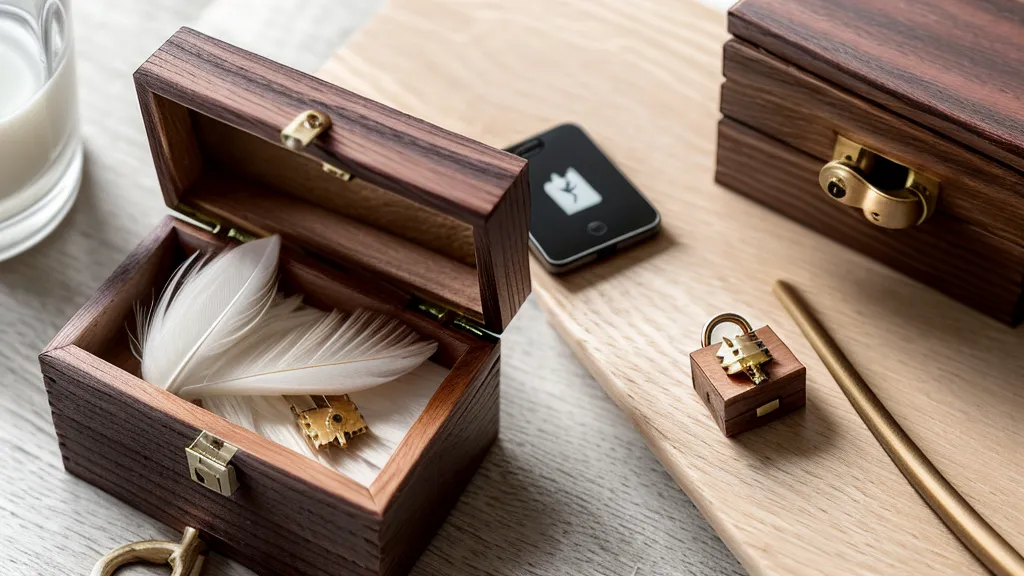
But here is the thing they don't tell you in the security blogs: zero-knowledge is a double-edged sword. In a zero-knowledge setup, the company hosting your data has no way to see your master password or your unencrypted vault. They use a 256-bit Secure Hash Algorithm, or SHA-256, to verify you are you without ever actually 'knowing' your secret. It’s like giving a neighbor a spare key to your house, but the key is inside a box that only your thumbprint can open. The neighbor has the box, but they can't get inside.
The Zero-Knowledge Trap for Non-Tech Users
This brings me to the unique angle I’ve developed after two years of this: zero-knowledge architecture is technically less secure for the average, non-technical user. That sounds like heresy in the security world, but hear me out. In our world—the world of marketing ops and SaaS management—the 'Forgot Password' button is a fundamental safety net. We rely on it like we rely on a household budget to catch overspending.
With a true zero-knowledge password manager, there is no 'Forgot Password' button. If you lose that master key, your data is gone. It is vaporized. Because I’ve seen this happen to colleagues, I’ve noticed a dangerous trend: people get so scared of losing access that they write their master password on a Post-it note stuck to their monitor, or they store it in an unencrypted 'Notes' app on their phone. By trying to be hyper-secure, the system pushes normal people toward incredibly insecure workarounds.
During my trials, I found that some apps handle this better than others. For instance, I spent a lot of time comparing Proton Pass vs Bitwarden to see which one felt more 'forgiving' for a marketing brain that is already juggling fifty other deadlines. I’ve learned that the 'best' encryption doesn't matter if the user experience is so rigid that it causes a total lockout during a Q4 launch.
Reflections from the Test Laptop
Just a few weeks ago, I was finishing up my final audit for the year. I sat back and looked at my Notion doc, which has grown into a sprawling monster of screenshots and recovery key locations. I’ve realized that true login hygiene isn't about the flashy UI or the latest marketing copy about 'military-grade' tech. It’s about the math that happens on your device before the data ever touches the cloud.
If you're managing a team, you have to find the balance between the absolute security of zero-knowledge and the reality that someone on your team *will* forget their password. I’ve found that RoboForm security features work best for my legacy marketing apps because they offer a middle ground that doesn't feel like I'm handling nuclear launch codes just to log into a stock photo site.
Two years in, I’m still the person with the test laptop and the shared Notion doc. I still get a little nervous every time I see a HubSpot logo in my inbox. But I’m no longer the person who thinks a spreadsheet is a 'secure database.' I’ve accepted that while zero-knowledge is the gold standard, it requires a level of personal responsibility that we aren't always taught in marketing school. It’s like keeping a spare house key with a neighbor: you have to trust the neighbor, but you also have to make sure you don't lose your own copy of the key in the process.
Login hygiene is a marathon, not a sprint. It’s about the small, boring choices we make every day—like checking the iteration counts on our hashing algorithms or finally deleting that departmental spreadsheet. It’s not always glamorous, and it certainly won't win any marketing awards, but it’s the only thing keeping that extra 's' in a domain from ruining your entire month.